
science
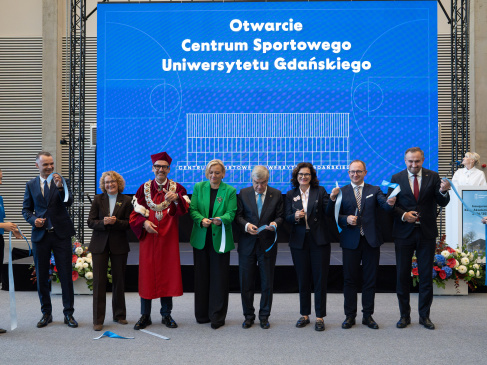
‘We have it!’ - with these words, the Rector of the University of Gdańsk, prof. Piotr Stepnowski, opened the University of Gdańsk Sports Centre. After more than half a century of waiting, the university has gained a modern and multi-purpose sports hall, which is intended to serve the entire academic community. And it was there, in this brand-new and…

academic life
By Rector's Decree, a policy has been introduced governing the use of modern IT tools at the University of Gdańsk, in particular artificial intelligence. Comprehensive technical support in this area will be provided by the Interdisciplinary Laboratory for Artificial Intelligence Applications, whose Director, dr Jakub Neumann, prof. UG, serves as the…

academic life
Dr hab. Monika Białek, from the Institute of Media, Journalism and Social Communication at the University of Gdańsk, has been honoured with the 2nd Zygmunt Gloger Award and Medal for her research into and promotion of knowledge about Polish radio reportage.
‘Polish radio is celebrating its 100th anniversary, and radio reportage has been part of it from…
academic life
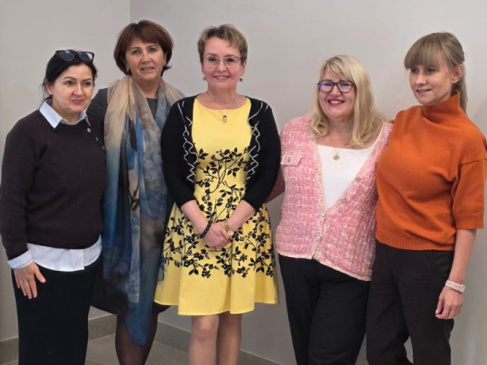
Polish Society of Clinical Psychology (PTPK) has elected a new executive committee. Prof. dr hab. Małgorzata Lipowska, Director of the Institute of Psychology at the University of Gdańsk, has taken up the post of President of the Society.
The new PTPK leadership was elected on 22 September 2026 during the PTPK General Meeting of Members. In addition to…
science
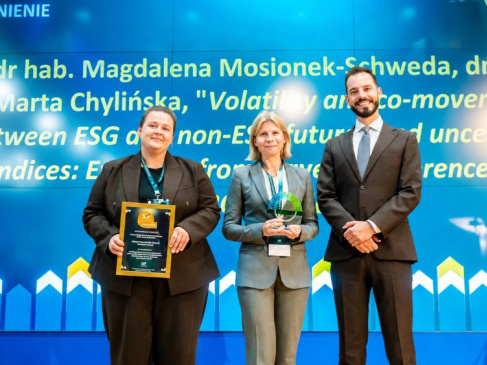
Dr inż. Marta Chylińska from the University of Gdańsk has received a prestigious honour in the POLSIF Sustainable Finance Research Award competition. The award-winning publication, of which she is a co-author, concerns the behaviour of financial markets incorporating ESG criteria in conditions of heightened uncertainty.
The honoured publication,…

cooperation
Yasmine from Algeria, Ines from Portugal, Jenny from Germany, and Hitesh from India. They came from different places, each with their own stories and experiences. For a few weeks, Gdańsk became their shared home. As part of the European Solidarity Corps, 14 volunteers from different parts of the world learnt not only to work together, but also what…

cooperation
Nearly 30 experts, researchers and practitioners representing 11 partner institutions from 5 European countries took part in a working meeting of the international TRIC consortium (Toward Resilient and Innovative Communities: Making Uncertainty Productive), in which the University of Gdańsk is also participating. The meeting took place on…
science
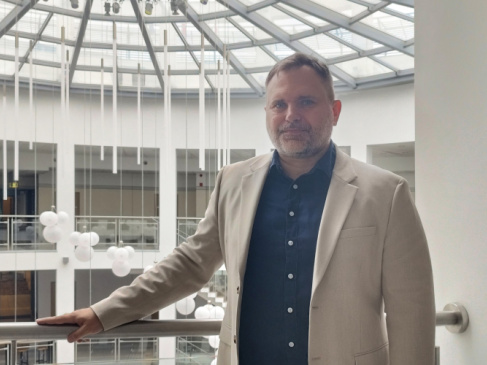
Dr Marek Rewizorski, prof. UG, has been honoured with a commendation in the Polish Society for European Studies (PTSE) competition for the best academic article in the field of European studies published between 2023 and 2025. The commended publication discusses the consequences of Russian aggression against Ukraine for the development of European…

culture
As part of the ‘Between.Pomiędzy Dispersed Festival’, prof. Christopher Morash from Trinity College Dublin will deliver a lecture on the dialogue between two UNESCO Cities of Literature – Gdańsk and Dublin. The event will take place at the House of Literature in Gdańsk on Thursday 24 September 2026 at 6.00 pm.
In his lecture, ‘What Rough…

sport
The ASA UG martial arts team took part in the annual European Universities Championships. This trip will go down in our club’s history - the University of Gdańsk returned from Tirana with three medals! Thanks to this result, our university has become, alongside AWF Katowice, the most successful Polish university at the European Universities…
academic life
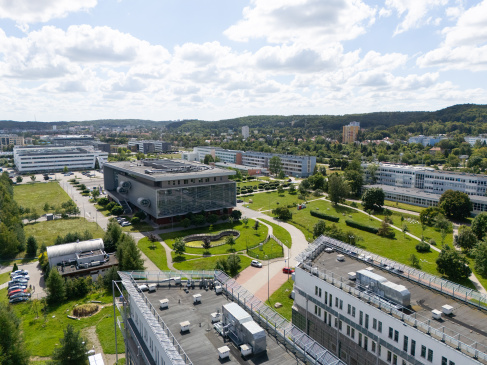
‘Gaudeamus igitur’ will be heard for the 57th time at the University of Gdańsk – this time in the exceptional surroundings of the newly built University of Gdańsk Sports Centre! The ceremony of the 2026/2027 academic year inauguration, combined with the grand opening of the Sports Centre, will take place on 1 October 2026 at 10.00 am. The inaugural lecture will be delivered by dr Thomas Bach, Honorary Doctor of the…
academic life
We encourage all students with a PESEL number to use mLegitymacja, a secure, modern and free tool available in the mObywatel app. Activating mLegitymacja does not require submitting an application – you simply need to meet a few conditions to quickly and easily obtain a document confirming your student status.
Due to the late publication of an…
academic life
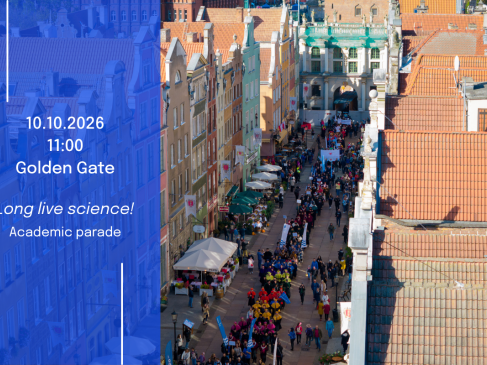
On 10 October, once again, we, the higher education institutions, authorities and residents, will come together to start the academic year. A colourful parade will make its way along the Royal Route, featuring academic traditions, unique costumes, music and artistic groups.
The parade, under the slogan “Long live science!”, is a special…
science
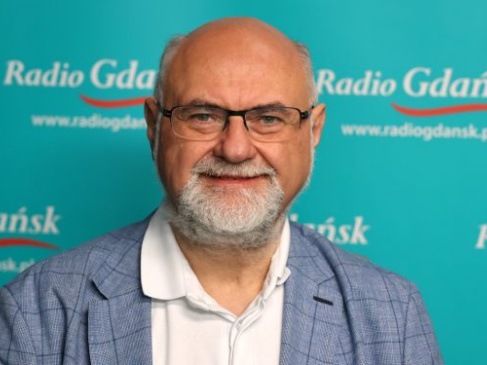
On 17 and 18 September, at the Faculty of Biology of the University of Gdańsk, people will be able to take part free of charge in research conducted as part of the ‘Genomics for Poland’ programme. It aims to understand the genetic characteristics of the Polish population. Prof. Grzegorz Węgrzyn from the University of Gdańsk spoke on the ‘Radiowo-…
science
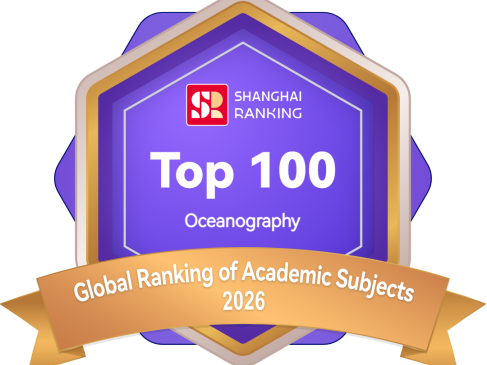
The University of Gdańsk has been ranked in the 51-75 bracket for Oceanography in this year’s edition of the Global Ranking of Academic Subjects (GRAS). This represents an improvement on its ranking of 76-100 in 2025 and 151-200 in 2024. The result confirms the gradual strengthening of the University of Gdańsk’s research position in this discipline.…

sea-eu
Nearly 300 participants from across Europe have travelled to the University of Gdańsk to discuss research and educational initiatives that bring together the coastal universities of the SEA-EU alliance. The Being SEA-EU conference addresses the key challenges facing coastal regions, as well as best practices in educational and research collaboration…
science
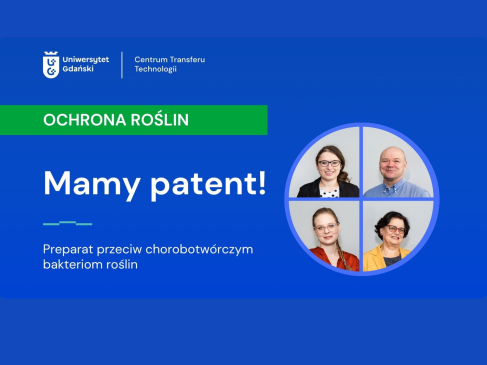
The Polish Patent Office has granted a patent to researchers from the Department of Plant Protection and Biotechnology and the Research and Implementation Laboratory of the Inter-University Faculty of Biotechnology at the University of Gdańsk and the Medical University of Gdańsk for a preparation designed to protect plants against diseases such as…

cooperation
During this year’s edition of the Q-Con conference - which brings together the academic and business communities on an equal footing and is dedicated to the practical applications of quantum solutions - the Pomeranian Quantum Declaration was signed. The signatories to the document are the University of Gdańsk, the Gdańsk Economic Development Agency…

science
As part of the ICEPACT project (NAWA Strategic Partnerships), students from the University of Gdańsk and partner universities within the SEA-EU alliance can take part in student internships at the Chilean Antarctic Institute (INACH) in Punta Arenas (Chile) and in Antarctica, on Nelson Island (South Shetland Islands). The call for applications is open…

science
Researchers from the Faculty of Chemistry at the University of Gdańsk have patented a new oxovanadium(IV) coordination compound. The invention may find application as a precatalyst in the synthesis of polymeric materials - ranging from plastics with precisely engineered properties to materials capable of absorbing gases, which in the future may support…

academic life
The traditional academic and local government annual parade of Pomeranian universities under the slogan ‘Long live science!’ takes place on 10 October! This year’s event is organised by The Fahrenheit Union of Universities in Gdańsk (in its new, expanded line-up) and the City of Gdańsk.
This joint Gdańsk opening of the academic year will take place for…

science
fot. Tomasz Nowicki / MWB UG i GUMed
Prof. Danuta Gutowska-Owsiak from the Intercollegiate Faculty of Biotechnology UG and MUG has been awarded the EFIS Eastern Star Award 2026. This prestigious honour from the European Federation of Immunological Societies is awarded annually to just three scientists from Eastern Europe conducting…

science
The European Patent Office (EPO) has granted a European patent for an invention developed by researchers from the Intercollegiate Faculty of Biotechnology UG and MUG. The patent relates to a new reagent used in the process of freeze-drying microorganisms. The invention was previously protected by a Polish patent granted by the Polish Patent Office -…

science
Dr Magdalena Miklaszewska is returning to Poland from Germany to continue her research into the metabolism and biotechnological production of waxes. She has received funding of over 2.3 million PLN to carry out her research project under the NAWA Polish Returns 2025 programme. She will conduct the research at the Intercollegiate Faculty of…

science
The Polish Research Fleet and the Centre for Pathogen Research and the Development of Innovative Therapies at the BSL-3+ Laboratory have been included on the Polish Research Infrastructure Map (PMIB). ‘This is an important endorsement of our university’s scientific potential and the quality of the research carried out by our scientists,’ says the…

science
Antarctic ecology, methods of monitoring the marine environment, tagging seabirds with geolocators and the sustainable management of marine living resources - these are just some of the topics that participants had the opportunity to explore during the course held at the University of Gdańsk in the second half of July as part of the ICEPACT project.…

science
What do an unsolved Sudoku puzzle, a scratched CD, and a quantum computer have in common? Which quantum technologies are likely to begin transforming our everyday lives within the next decade? And does Poland have a chance to become one of the leaders of the second quantum revolution? We spoke with dr Felix Huber from the Institute of Computer Science…

science
Three young researchers from the University of Gdańsk were among the winners of the 10th edition of the National Science Centre’s SONATINA competition. In total, they will receive over 2 million zlotys to carry out their research projects. The grants support researchers embarking on independent academic careers, enabling them to conduct innovative…

academic life
Bubas, the 39-year-old leader of the pod, has no intention of moving. The trainer patiently encourages him to enter the pool. Once more. And once more. He responds with a loud grunt, turns his head away and pointedly stays put. The tourists burst out laughing. ‘He’s got character. He knows what he wants,’ says Natalia Makałowska-Kur, a seal keeper and…

science
An article on recognising texts generated by artificial intelligence has been published in ‘The Economist’. Dr Karolina Rudnicka from the Faculty of Languages at the University of Gdańsk provided expert commentary.
In the article, which explores the challenges associated with recognising texts created by large language models (LLMs), dr Rudnicka points…