
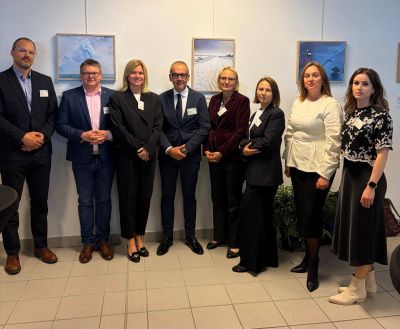
Delegacja UG
A meeting of representatives from the universities forming the SEA-EU alliance has concluded in Brest, during which over six years of cooperation were reviewed and plans for the coming years were established. This marks a key transitional moment for the coastal community, which is bringing the second phase of the SEA-EU 2.0 partnership to a close and moving on to the next - SEA-EU Next. Between 9 and 11 June 2026, over 100 people from across Europe gathered at the University of West Brittany, including authorities, deans, staff and students from coastal universities.
‘Today, we are moving beyond this phase of the first project, the first programme, and entering a period of truly intensive strengthening of our cooperation in the field of joint education. Joint degree programmes at bachelor’s and master’s level, Doctoral Schools and cotutelle programmes are an absolute priority for us,’ said the Rector of the University of Gdańsk, prof. dr hab. Piotr Stepnowski. He went on to add that it is equally important to strengthen institutional cooperation within the SEA-EU Association, which is designed to assist in securing EU funding for joint research and teaching projects.
The University of Gdańsk was also represented at the international event by: the Vice-Rector for Research prof. dr hab. Wiesław Laskowski, the Vice-Rector for Education dr Ewa Szymczak, prof. UG, the Dean of the Inter-University Faculty of Biotechnology dr hab. Ewelina Król, prof. UG, and the Dean of the Faculty of Oceanography and Geography dr hab. Katarzyna Smolarz, prof. UG, UG student representative Zofia Jodko, and representatives of the UG administration: SEA-EU 2.0 project manager Marlena Rutkowska-Myzyk, head of the SEA-EU Office Natalia Lubińska, and coordinator of the Office for Legal Affairs Maciej Siwy.
Over 6 years of collaboration on the European University of the Seas
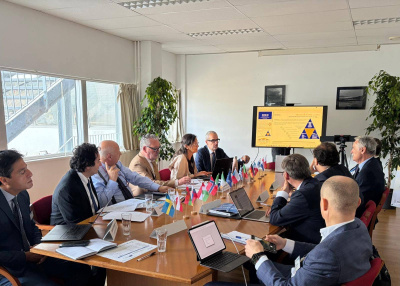
Governing Week comprised parallel meetings of ten different bodies operating within the SEA-EU framework – ranging from the Student Council to meetings of SEA-EU Vice-Rectors and deans. The highlight of the event was a full-day meeting of the Governing Board, during which the rectors of the partner universities made key decisions regarding the future of the alliance.
One of the greatest successes discussed in Brest was the successful establishment of the SEA-EU Association. The new legal structure will allow the partnership to operate independently of project funding. Work on establishing the entity took a year and a half and required numerous meetings and agreements at the highest levels of the alliance’s management. The next step in the SEA-EU Association’s activities will be the establishment of the SEA-EU Office in Brussels, which will assist in the efficient acquisition of European funding for research and educational projects.
The SEA-EU’s educational offering is also constantly being developed. For several years now, students at coastal universities have been able to enrol on international micro-credential courses led by international experts. Since last year, joint degree programmes have been in operation: the Sea-Blue bachelor’s degree and the MIPMAL and STORM master’s degrees. This year, the SEA-EU universities are taking things to an even higher level and are working on joint doctoral programmes delivered under the cotutelle model.
There was also discussion regarding the challenges facing SEA-EU in the coming years. The rectors discussed a new phase in the alliance’s operations under the banner of SEA-EU NEXT, as well as opportunities to secure additional sources of external funding. In addition to funding from the “European Universities Initiative”, the universities of the SEA-EU alliance are constantly applying for further projects supporting the activities of the coastal partnership. In Brest, discussions included support for joint degree programmes through the European Degree Pathway and Blue Talent Scholarship grants.
Multidimensional cooperation
Governing Week also featured numerous meetings of other bodies operating within the SEA-EU framework. The Student Council discussed the future of the European alliances initiative. The Council of Cities hosting SEA-EU universities discussed the organisation of events promoting science. Meanwhile, the Council of Ports of SEA-EU Cities focused on cooperation with larger organisations representing ports in the region. Key issues were also discussed by the SEA-EU technical teams, which deliberated on the successful completion of the second phase of the alliance’s funding.
Deans from SEA-EU universities also met for the second time to deepen cooperation and streamline travel procedures, as well as to set priorities for the alliance’s new governing body. The University of Gdańsk was represented by dr hab. Ewelina Król, prof. UG, and dr hab. Katarzyna Smolarz, prof. UG.
The decisions taken during Governing Week in Brest show that SEA-EU is moving from the partnership-building stage to its further institutionalisation and development. Joint degree programmes, new research initiatives and the establishment of the SEA-EU Association are set to further strengthen cooperation between the alliance’s universities in the coming years. For the partners, this means not only new opportunities for securing funding, but also a further step towards creating a sustainable common European area of higher education and research.
